 Skip to content

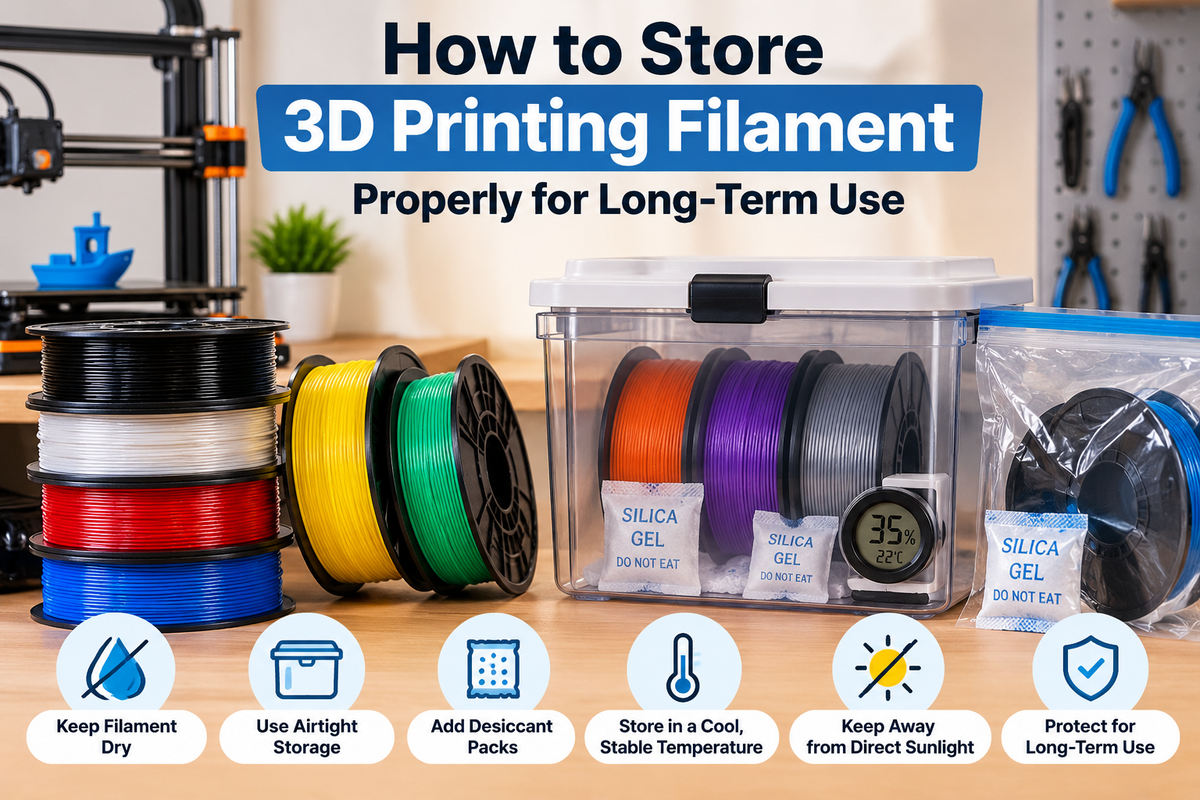
How to store 3D printing filament properly becomes a real question about the day a spare spool has spent a month open on the shelf. Open air adds moisture, and the water turns up later as stringing, bubbles and weak layers.
Filament moisture protection is cheap. Wasted spools and failed prints are not. The habits, tools and drying steps below the filament storage guide keep each spool ready to print.
Why Filament Moisture Protection Matters
Most filaments are hygroscopic, so it pulls water vapour from the air bit by bit. You notice it in the print:
- Popping sounds and tiny bubbles as steam escapes the nozzle
- Rough, dull or stringy surfaces
- Weak layer bonding, which makes parts snap
- Patchy colour
- Glossy finishes that lose their shine
Filament moisture protection matters most for nylon, PVA and TPU, which drink water fast. PETG falls in the middle. PLA is slower, but no spool is fully immune and ASA 3Dprinting filament needs a dry spot between jobs even though it is made for outdoor parts.
Signs Your Spool Has Gone Damp
Check these before blaming your slicer settings:
- Hissing or crackling as filament leaves the nozzle
- Tiny hairs strung between printed features
- Pitted top layers
- Filament that snaps cleanly when you bend it
How to Store 3D Printing Filament at Home
How to store 3D printing filament well comes down to one idea, which is keeping humid air away from it. Pick the option that matches your budget and bench space.
- Airtight Containers with Desiccant
A sealed bin and a few silica gel packs make the simplest start. Drop the spool in after each print and close the lid.
A hand pump pushes the damp air out of the bag. These suit spools that will stay untouched for weeks.
A dry box shelters the spool while it feeds, which matters long jobs.
Tuck one inside the container. When the reading climbs, the desiccant needs to change. Aim for humidity below about 20 to 30 % with sensitive materials.
Park every container in a cool, shaded room away from sunlight and heaters.
Drying Filament That Has Already Absorbed Water
A purpose-built filament dryer brings damp spools back with gentle heat. Treat these ranges as a rough guide and follow the spool label first.
|
Material |
Moisture Sensitivity |
Typical Drying Range |
|
Low to moderate |
Around 40 to 45°C |
|
|
Moderate |
Around 70°C |
|
|
ASA |
Low to moderate |
Around 80°C |
|
Moderate to high |
Around 50 to 60°C |
|
|
Very high |
Around 70 to 80°C |
|
|
Very high |
Around 50°C |
- Dry for around 4 to 6 hours, then test with a short print.
- Seal the spool while it cools.
- Skip kitchen ovens, because uneven heat can warp the spool.
Final Thoughts on Filament Moisture Protection
Now that you know how to store 3D printing filament, a few small habits protect every spool you own. Seal it, add desiccant, check humidity now and then. 3D META stocks a large filament range along with a Filament Bag + Pump for sealed storage. Get in touch with the team to choose the right spool and storage setup, then order your next spool and keep it dry from day one.