 Skip to content

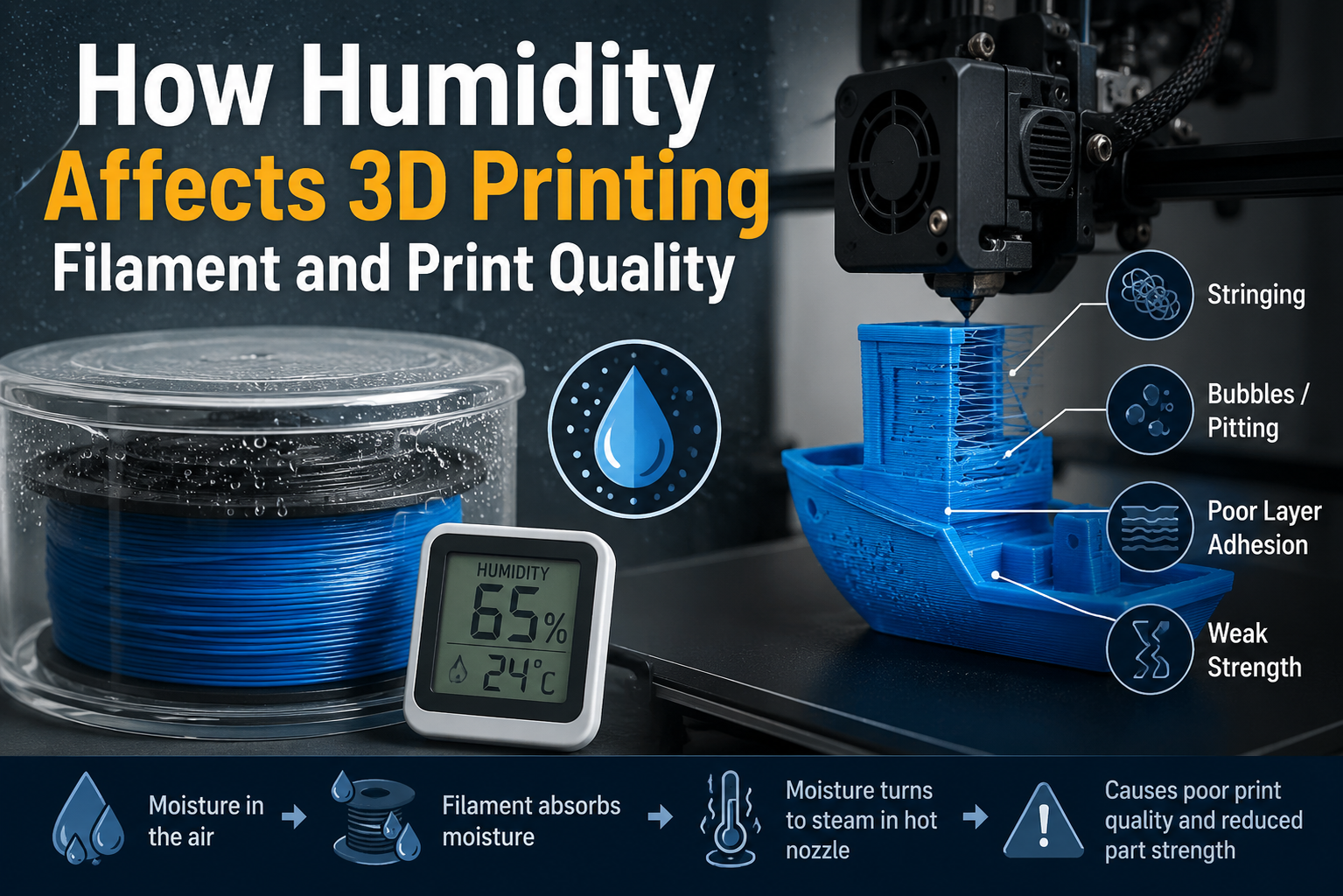
Many 3D printing enthusiasts focus on printer settings, nozzle temperatures, and slicing profiles, but often overlook one critical factor humidity. Moisture in the air can significantly impact filament performance, leading to print defects, reduced strength, and inconsistent results.
Most 3D printing filaments are hygroscopic, meaning they absorb moisture from the surrounding environment. Even filament stored on a shelf for a few days can absorb enough moisture to affect print quality.
Understanding how humidity affects 3D printing filament can help you avoid failed prints, reduce material waste, and achieve more consistent results.
Why Does Filament Absorb Moisture?
Certain filament materials naturally attract water molecules from the air.
Common Moisture-Absorbing Filaments
- Nylon
- TPU
- PETG
- PVA
- ABS
- PLA (to a lesser extent)
The rate of moisture absorption depends on:
- Humidity levels in the room
- Storage conditions
- Filament material type
- Exposure duration
In humid environments, filament can begin absorbing moisture within a matter of hours.
Signs Your Filament Has Absorbed Moisture
Moisture-related issues are often mistaken for printer calibration problems.
Common Symptoms of Wet Filament
- Popping or crackling sounds during printing
- Excessive stringing
- Rough surface finish
- Inconsistent extrusion
- Small holes or bubbles on printed parts
- Reduced print strength
- Poor layer adhesion
If your printer settings are correct but print quality suddenly declines, moisture may be the cause.
How Moisture Affects Print Quality
When filament containing moisture passes through a hot nozzle, the trapped water turns into steam.
This creates tiny pockets of pressure that interfere with smooth material flow.
Common Print Defects Caused by Humidity
Increased Stringing
- Fine strands appear between printed sections
- Prints require additional post-processing
- Surface quality may be reduced
Rough Surface Finish
- Parts may appear uneven or textured
- Visible imperfections can affect appearance
- Fine details may become less defined
Weak Layer Bonding
- Layers may not fuse correctly
- Parts become more brittle
- Functional components may fail under stress
Inconsistent Extrusion
- Material flow becomes unpredictable
- Gaps may appear in walls and layers
- Dimensional accuracy can suffer
These issues can occur even when all printer settings remain unchanged.
Which Filaments Are Most Affected by Humidity?
Not all materials react the same way to moisture exposure.
Highly Sensitive Filaments
1. Nylon
- Extremely hygroscopic
- Can absorb significant moisture within hours
- Often requires drying before use
2. TPU
- Flexible materials absorb moisture quickly
- Wet TPU commonly causes stringing and poor extrusion
3. PVA
- Designed to dissolve in water
- Requires careful storage at all times
Moderately Sensitive Filaments
1. PETG
- Can absorb moisture over time
- May develop stringing and surface defects
2.ABS
- Less sensitive than Nylon
- Still benefits from dry storage
Less Sensitive Filaments
1.PLA
- More forgiving than many materials
- Long-term exposure can still affect print quality
Even filaments considered moisture-resistant perform better when stored properly.
How to Protect Filament from Humidity
Preventing moisture absorption is easier than troubleshooting failed prints later.
Store Filament in Airtight Containers
Use:
- Sealed plastic storage boxes
- Vacuum storage bags
- Dedicated filament storage containers
Limiting exposure to air helps preserve filament quality.
Add Desiccants
Desiccants absorb excess moisture inside storage containers.
Popular options include:
- Silica gel packs
- Reusable drying beads
- Moisture-absorbing containers
Replace or recharge desiccants regularly for maximum effectiveness.
Keep Filament Away from Damp Areas
Avoid storing filament near:
- Open windows
- Laundry rooms
- Garages with poor ventilation
- Areas exposed to temperature fluctuations
A stable environment helps maintain filament condition.
Can Wet Filament Be Saved?
In many cases, yes.
Moisture-damaged filament can often be restored through proper drying.
Common Filament Drying Methods
- Filament dryers
- Food dehydrators
- Drying boxes designed for 3D printing materials
Drying removes trapped moisture and can significantly improve print quality.
Always follow the manufacturer's recommended drying temperature to avoid damaging the filament.
Best Practices for Consistent Print Quality
To minimise humidity-related issues:
- Store all filament in sealed containers
- Use desiccants in storage boxes
- Keep partially used spools protected
- Dry sensitive filaments before critical prints
- Monitor room humidity when possible
- Inspect filament regularly for signs of moisture exposure
These simple habits can prevent many common printing problems.
Conclusion
Humidity is one of the most overlooked factors affecting 3D printing success. Moisture absorbed by filament can lead to stringing, rough surfaces, weak layer adhesion, and inconsistent extrusion. While these issues may seem like printer calibration problems, the real cause is often improper filament storage.
By understanding how humidity affects different materials and implementing proper storage practices, you can improve print quality, reduce waste, and achieve more reliable results from every spool of filament.