 Skip to content

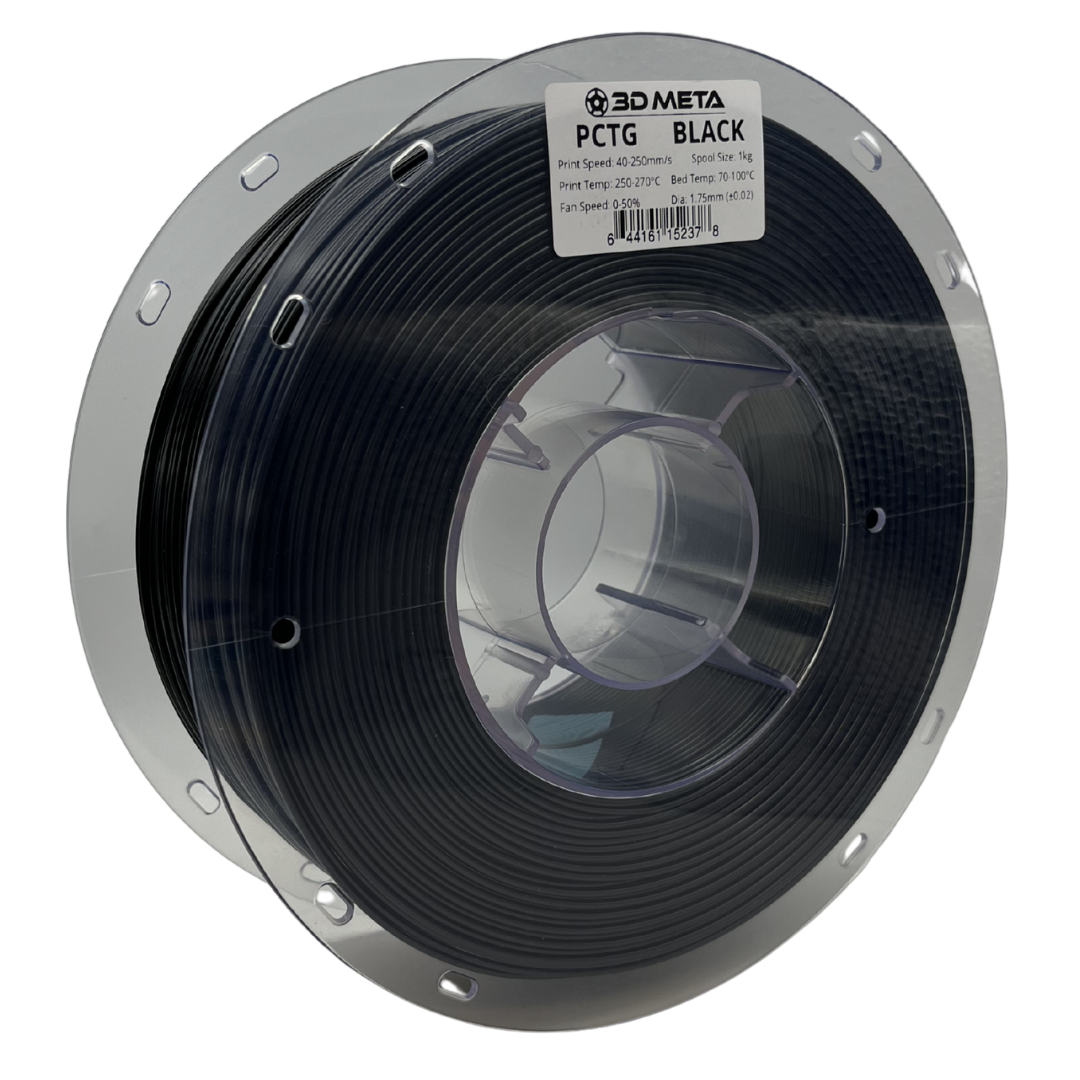

Description
PCTG 3D Printing Filament
3D META's PCTG 3D printing filament is an advanced engineering copolyester that delivers exceptional toughness and chemical resistance — outperforming PETG in nearly every category. PCTG (polycyclohexylenedimethylene terephthalate glycol) combines the easy printability of PETG with significantly better impact resistance and improved chemical resistance. The result is a high-performance filament ideal for functional engineering parts and demanding mechanical applications. Like all 3D META filaments, PCTG is manufactured to strict quality standards and supplied on recyclable plastic spools.
Key Features of PCTG 3D Printing Filament
• Superior Impact Resistance: Significantly tougher than PETG — resists cracking and shattering under sudden loads.
• Excellent Chemical Resistance: Stands up to a wider range of solvents, oils, and cleaning agents than PETG.
• Manufactured with High-Quality Materials: Premium copolyester resin for consistent extrusion and mechanical performance.
• Easy to Print: Prints with PETG-like settings on standard FDM printers — no enclosure required.
• Strong Layer Adhesion: Excellent inter-layer bonding produces tough, fatigue-resistant parts.
• Strict QA Manufacturing: Every batch is checked for diameter consistency and print performance.
Applications for PCTG 3D Printing Filament
PCTG is engineered for users who need PETG's printability with significantly better mechanical and chemical performance:
• Functional Engineering Parts: Brackets, housings, and mechanical components that need real toughness.
• Food-Contact Prototypes: PCTG is widely used in food and beverage applications and is suitable for prototype parts (always verify final food-contact compliance for production use).
• Chemical-Resistant Containers: Bottles, containers, and lab equipment requiring chemical resistance.
• High-Impact Components: Drone parts, protective covers, and parts that need to survive drops and impacts.
Storage and Drying for PCTG Filament
PCTG is hygroscopic and prints best when thoroughly dried:
• Store in a Cool, Dry, Dark Environment: Use airtight containers or resealable bags with desiccants between prints.
• Drying Recommendations: Dry PCTG before printing if stored for more than a few days. Use a filament dryer, food dehydrator, or enclosed 3D printer at 65–70°C for 4–6 hours.
Why Choose 3D META's PCTG 3D Printing Filament
• Engineering-Grade Performance – Significantly tougher and more chemically resistant than standard PETG.
• Top-Quality Materials – Premium copolyester resin for clear, consistent, high-strength prints.
• Strict QA Standards – Tight diameter tolerance and verified print performance, batch after batch.
• Fully Tested In-House – Every batch is print-tested before release on representative engineering geometries.
• Constant Innovation – 3D META is committed to expanding its engineering-grade filament range based on customer feedback.
Ready to step up from PETG to a tougher, clearer, more chemically resistant engineering filament? Order 3D META PCTG filament today and print with engineering-grade performance.
Print Settings
Technical Specs
FAQs:
1. How is PCTG different from PETG?
PCTG is an upgraded copolyester with significantly higher impact resistance, better chemical resistance, and superior optical clarity. It prints at slightly higher temperatures than PETG but otherwise uses similar settings — making it an easy upgrade for users who need PETG's printability with engineering-grade toughness.
2. What temperature should I print PCTG at?
Print at 240–260°C with a heated bed at 75–85°C. Active cooling helps maintain dimensional accuracy and optical clarity. No enclosure required.
3. Is PCTG suitable for food contact?
PCTG resin is widely used in food and beverage industries. However, 3D printed parts have layer lines that can harbour bacteria, and additives, colourants, and processing conditions affect compliance. For prototype food-contact use, PCTG is appropriate; for production food-contact applications, additional certification and post-processing are required.